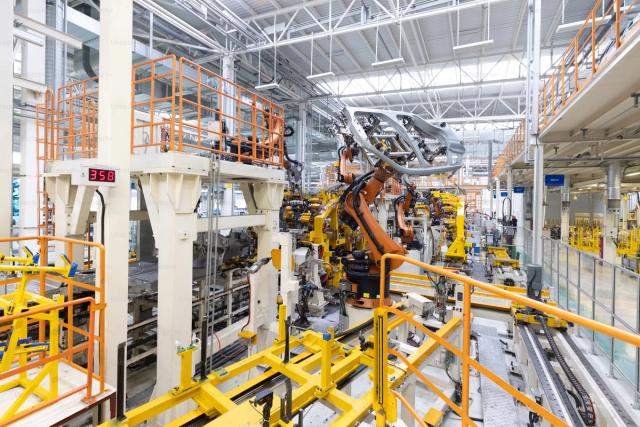

For most of its history, electrical engineering has been concerned primarily with physical systems. Its practitioners designed generators, transformers, motors, transmission networks, control circuits and the infrastructure required to move and use electrical energy. Even as electronics transformed the discipline, the underlying object of interest remained physical: a circuit, a machine, an instrument or a power system.
That distinction has become increasingly difficult to maintain.
A modern electrical system is often as dependent on software as it is on copper, silicon and magnetic materials. An inverter does not merely convert electrical energy; it measures voltages and currents, interprets those measurements, makes decisions and continuously adjusts its behaviour. A motor controller can alter torque and speed according to sensor feedback. An energy-management system can monitor an entire building and determine when different loads should operate. Even the humble electricity meter has evolved from a device that simply records consumption into a sophisticated electronic system capable of measurement, communication and analysis.
The underlying physics has not changed. What has changed is how much of that physical world engineers can observe and control.
From physical systems to cyber-physical systems
The term "cyber-physical system" can sound unnecessarily academic, but the basic idea is straightforward. A physical system is connected to computation in such a way that the computer does not merely process information about the system; it participates in controlling the system itself.
Consider a temperature-controlled industrial process. A traditional arrangement might use a thermostat and a relay to switch a heater on and off. A modern controller could continuously measure temperature, account for the rate at which temperature is changing, monitor the state of the heating element, communicate with another machine and modify its control strategy according to operating conditions.
The physical process is still there. Heat is still being transferred, electrical current still flows through the heater and the temperature sensor still responds to the physical environment. What has changed is the layer of intelligence sitting between measurement and action.
This pattern is now appearing almost everywhere.
Solar installations can measure generation and consumption in real time. Battery systems can monitor their own electrical and thermal conditions. Industrial machines can report operating parameters and faults. Buildings can coordinate lighting, ventilation, heating and other loads. Vehicles contain increasingly sophisticated electronic control systems that continuously interpret information from sensors distributed throughout the machine.
The result is a gradual merging of electrical engineering, electronics, software and control engineering.
Hardware still determines what is possible
It would be a mistake, however, to interpret this development as the replacement of electrical engineering by software. In many ways, the opposite is true: software makes it possible to extract more capability from increasingly sophisticated hardware.
A program cannot compensate for a conductor that has been incorrectly sized. A control algorithm cannot make an inadequately rated semiconductor safe. Software cannot eliminate the thermal limitations of a motor or the physical characteristics of a battery.
The physical design establishes the boundaries within which the software operates.
This is particularly important in systems that interact with significant amounts of energy. Engineers working with power electronics, for example, must understand switching behaviour, losses, thermal management, electromagnetic interference, protection and device limitations. The software controlling the system must ultimately operate within those physical constraints.
The most capable systems therefore emerge when the physical and digital aspects are designed together rather than treated as separate projects.
Embedded systems are closing the gap
The growth of inexpensive microcontrollers has been one of the most important forces behind this convergence. A device that once required a collection of discrete components can now often be implemented using a relatively small amount of electronics built around a programmable processor.
That processor can read sensors, operate outputs, communicate with other equipment and execute control algorithms, often while consuming very little power.
The significance of this is not simply that products now contain computers. It is that computation has become inexpensive enough to be embedded into systems where it would previously have been impractical.
An energy-monitoring device, for example, can measure current and voltage, calculate power and energy consumption, record historical data and communicate the results to another system. A motor controller can continuously adjust its output according to feedback from position or speed sensors. A protection system can monitor electrical conditions and respond to abnormal events within precisely defined limits.
The computer has disappeared into the product.
That is one of the defining characteristics of modern embedded technology: users increasingly interact with the behaviour of a system without necessarily being aware that a substantial amount of computation is taking place underneath it.
Measurement changes engineering
One of the most important consequences of this development is the increasing value of measurement.
An engineer can only control what a system is capable of revealing. If the only information available is that a machine has stopped working, diagnosis becomes difficult. If the system can report its supply voltage, temperature, current, sensor status, communication state and recent fault history, the problem becomes considerably easier to understand.
This creates a useful progression:
- Measurement establishes what is happening.
- Data records that information over time.
- Analysis identifies patterns and relationships.
- Control uses those insights to influence the physical system.
The distinction between these stages is important because not every system needs to progress all the way to autonomous control. Sometimes simply having better information is enough to produce a significant improvement.
A building that can accurately measure its energy consumption may reveal waste that was previously invisible. A machine that records its operating temperature may make an intermittent fault much easier to diagnose. A solar installation that records generation over time can help distinguish a genuine equipment problem from normal changes in environmental conditions.
Digital technology therefore does not necessarily make engineering more complicated for its own sake. Properly applied, it can make physical systems more understandable.
The engineer's role is changing
This convergence is also changing the skills required of engineers.
A person designing a modern electrical product may need to understand circuit design, power electronics, sensors, embedded programming, communications and mechanical constraints. That does not mean every engineer must become an expert in every discipline. It does mean that understanding the interfaces between disciplines is becoming increasingly valuable.
A software engineer working on an industrial controller needs some understanding of the physical process being controlled. An electrical engineer designing a connected product needs to understand how its firmware and communications architecture will behave. A product designer working with sensors needs to appreciate the limitations of the underlying measurements.
The strongest teams will often be those capable of communicating across these boundaries.
This is particularly significant for smaller engineering companies. A large organization can maintain separate teams for electrical engineering, firmware, mechanical engineering, software and data science. A smaller team often cannot. The ability to move comfortably between disciplines can therefore become a substantial advantage.
Engineering is becoming more integrated
The deeper change is not that electrical engineers are becoming software engineers. It is that the products being built no longer fit comfortably into traditional categories.
A modern inverter is simultaneously a power-electronic system, an embedded computer and a control system. A smart meter is simultaneously an electrical measurement device, a communications device and a software platform. An electric vehicle is an enormous integration of electrical power, electronics, software, mechanical systems, sensors and control.
The boundaries between these disciplines still matter. The underlying expertise remains specialized. But the products themselves increasingly exist at their intersection.
That creates a different kind of engineering challenge and, perhaps more importantly, a different kind of opportunity.
The engineers who can understand both the physical world and the digital systems used to observe and control it will have an increasingly powerful ability to turn ideas into functioning technology. The future of electrical engineering is therefore unlikely to be less physical. It is likely to be more deeply connected to computation than ever before.
THE END