

The global artificial intelligence race has created an unusual problem for governments trying to control access to advanced computing technology. A company may be prohibited from purchasing powerful AI processors directly, yet still obtain access to thousands of them by renting computing capacity from a data centre in another country. Washington is now attempting to close that gap.
On 19 November, new US Department of Commerce export-control regulations took effect, introducing additional licensing requirements for advanced semiconductors destined for five countries: Indonesia, Malaysia, Singapore, Thailand and Brazil. More significantly, the regulations extend controls to overseas data centres supplying substantial computing capacity to companies headquartered in China and other restricted jurisdictions. The implications extend well beyond the US-China technology rivalry. They reach into the rapidly expanding data-centre industry of Southeast Asia, an increasingly important destination for the infrastructure powering the global AI economy.
From controlling chips to controlling computing power
For years, US semiconductor restrictions have largely focused on the physical movement of advanced processors and manufacturing equipment. The objective has been to limit China's access to technologies considered essential for developing sophisticated AI systems and other strategic capabilities. However, cloud computing has complicated that approach.
A company developing an AI model does not necessarily need to own the processors running its calculations. It can rent access to GPUs hosted in a data centre thousands of kilometres away. The hardware remains where it is, while computing resources are delivered over a network. This creates a distinction between possessing advanced computing equipment and having access to its capabilities. The new regulations address that distinction by introducing licensing requirements when advanced computing hardware is destined for overseas data centres that provide significant computing capacity to restricted foreign customers. The requirements also extend to certain previously exported hardware when it is used for controlled remote computing services.
The regulations also introduce additional licensing requirements for advanced semiconductor exports to five countries identified as presenting elevated diversion risks. These are not blanket prohibitions: applications are subject to review, and qualifying US-headquartered companies can benefit from an exemption provided they meet reporting requirements. The shift is significant. Export controls are increasingly concerned with who ultimately accesses computing resources, rather than simply where a processor is shipped.
Why Southeast Asia has become important
The choice of countries covered by the new restrictions is particularly revealing. Malaysia, Singapore and Thailand have spent years positioning themselves as important destinations for semiconductor-related investment and digital infrastructure. Their geographical position, established manufacturing industries and expanding technology ecosystems have made them attractive locations for data centres serving regional and international customers. Malaysia, in particular, has experienced substantial interest in data-centre development, including projects around Johor and Kuala Lumpur.
That growth now creates a complicated regulatory environment. A data-centre operator may invest heavily in buildings, cooling systems, electrical infrastructure and advanced processors, expecting to sell computing capacity to a diverse customer base. If some of those customers are subject to US restrictions, the operator must establish whether its services require additional licensing. This is not simply an administrative inconvenience. It introduces uncertainty into decisions involving substantial long-term investments.
The commercial consequences could include additional compliance costs, delayed deployments and changes in customer relationships. Some operators may become more selective about the businesses they serve, even where the precise regulatory position is not immediately clear. The Center for Strategic and International Studies (CSIS) identifies another potential problem: uncertainty over compliance requirements could encourage companies to adopt overly cautious policies, restricting otherwise legitimate commercial activity to avoid regulatory exposure.
TSMC and the manufacturing consequences
The implications are already extending into semiconductor manufacturing. On 19 November, Reuters reported that Taiwan Semiconductor Manufacturing Company (TSMC) had instructed customers that affected Chinese chip-design orders using manufacturing processes of 16 nanometres or below must be suspended unless the necessary US licences are obtained. Affected Chinese customers would generally be limited to older 28nm and 40nm manufacturing processes, subject to restrictions involving high-bandwidth memory and advanced packaging.
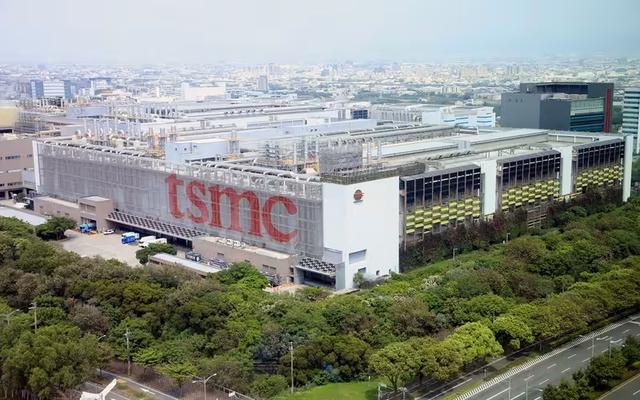
These distinctions matter because modern AI processors depend on several interconnected technologies. Advanced manufacturing processes allow designers to integrate increasingly sophisticated transistor arrangements into processors. High-bandwidth memory enables rapid movement of data between processors and memory, while advanced packaging brings different semiconductor components together to improve performance.
Restricting access to these technologies can therefore affect the development of competitive AI processors even when a company retains the ability to design its own chips. Reuters also reported that TSMC is strengthening customer verification, examining ownership structures, operating locations, packaging providers and shipping arrangements. The consequences for Chinese chip designers could be substantial. However, restrictions on access to foreign manufacturing do not eliminate China's ability to develop domestic alternatives. They increase the technological and commercial challenges involved in doing so.
The consequences extend beyond China
The effectiveness of these restrictions will depend partly on how consistently they are enforced and whether alternative supply arrangements emerge. Companies seeking computing capacity may redirect their business towards other providers or jurisdictions. Meanwhile, countries affected by the restrictions may strengthen their export-control systems to demonstrate that their infrastructure cannot easily become a route around international restrictions.
For Southeast Asian economies, this presents a difficult balancing act. They have strong incentives to attract investment in data centres and semiconductor manufacturing, but their ambitions increasingly intersect with the strategic interests of major technology powers. There is also a broader question about technological sovereignty. Countries seeking to participate in the AI economy need more than data-centre buildings. They need reliable electricity, advanced processors, telecommunications infrastructure, technical expertise and access to international supply chains. Yet even when they successfully attract the necessary investment, decisions made by foreign governments can influence how that infrastructure is used.
The new US regulations illustrate how computing power is becoming an increasingly important instrument of international technological policy. The physical location of a data centre may determine where the infrastructure is built, but it does not necessarily determine who has the authority to regulate access to its computing capabilities. That distinction is becoming one of the defining challenges of the global AI industry.


Discussion
Join the discussion
Comments are hosted by GitHub Discussions. You will need a GitHub account to take part.