
Billions are flowing into AI infrastructure, but America's ageing electricity network is struggling to keep pace. The emerging bottleneck is not simply generating more power but delivering it where the computing industry needs it. The artificial intelligence industry has become exceptionally good at building expensive things. Technology companies are committing hundreds of billions of dollars to data centres, acquiring advanced processors and competing to construct the computing infrastructure needed to train and operate increasingly capable AI systems.
Yet an uncomfortable problem is emerging beneath this extraordinary investment cycle: the electricity grid cannot necessarily accommodate the infrastructure being built on top of it. This is not primarily a problem of computing technology. It is a problem of physical infrastructure, engineering and the institutions responsible for developing it.
The distinction matters because a data centre can have its buildings completed, its servers installed and its financing secured, yet remain unable to operate at its intended capacity because the local electricity network cannot supply enough power. In an industry accustomed to measuring progress in product releases and quarterly investment announcements, waiting years for a transmission connection represents a very different kind of constraint.

The difference between producing electricity and delivering it
Electricity generation and electricity transmission are often discussed as though they were interchangeable. They are not. Generation is the process of converting energy from sources such as natural gas, nuclear fuel, wind, sunlight and hydropower into electrical energy. Transmission is the infrastructure that transports that electricity, usually at high voltages, across considerable distances to substations and regional distribution networks.
From there, distribution systems deliver electricity to individual consumers and businesses. Each stage has its own engineering constraints. Increasing generation capacity does not automatically increase the amount of electricity that can be delivered to a particular location.
Imagine a region with several power stations capable of producing more electricity than its consumers currently require. If the transmission corridors connecting those stations to a growing industrial area are already operating near their limits, a new factory or data centre may struggle to obtain additional capacity. The electricity exists, but the network cannot necessarily transport it where it is needed. This is becoming increasingly relevant to the American AI industry, whose data centres are often concentrated in particular geographical areas rather than distributed evenly across the country.
The scale of the anticipated demand is considerable. Grid Strategies' 2025 analysis of utility and regional forecasts identified approximately 166 GW of projected US summer peak-demand growth between 2025 and 2030. Data centres accounted for roughly 55% of the forecast increase. These are planning projections, not guaranteed demand, and some announced projects may never materialise. Nevertheless, they illustrate the scale of the challenge facing infrastructure planners.
The Electric Power Research Institute's 2026 analysis estimates that American data centres consumed approximately 177–192 TWh of electricity in 2024. Its scenarios project consumption reaching approximately 380–790 TWh by 2030. The considerable range reflects genuine uncertainty about how quickly facilities will be completed, how intensively they will operate and how AI demand develops. These figures describe a potential transformation in electricity consumption. Accommodating it requires more than installing additional generating equipment.

An infrastructure industry operating on a different clock
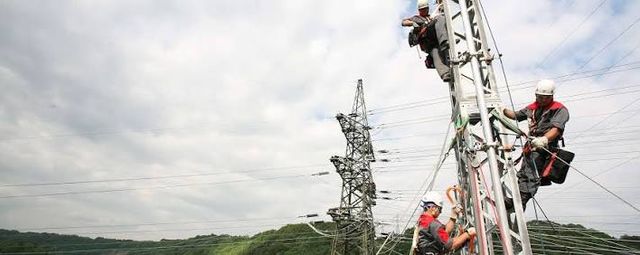
One of the most revealing examples is the Cardinal-Hickory Creek transmission project connecting Iowa and Wisconsin. The 102-mile, 345-kilovolt transmission line took more than a decade of planning and construction before entering service in September 2024. Its development involved multiple utilities, regulatory approvals, environmental considerations and other institutional processes. It is a useful illustration of the time involved in expanding electricity infrastructure, particularly when projects cross administrative boundaries and encounter competing interests.
The problem extends beyond individual projects. According to the North American Electric Reliability Corporation's 2025 Long-Term Reliability Assessment, 13 of its 23 assessment areas face resource adequacy challenges over the coming decade. Its assessment also identifies more than 224 GW of projected summer peak-demand growth across the North American bulk power system over ten years, 69% higher than the previous assessment's projection. The report identifies a substantial difference between projects being discussed or planned and infrastructure actually being built. Of nearly 900 transmission projects in construction or planning, at least 390 had been delayed from their originally expected operational dates.
There is a structural explanation for this mismatch.Data centres can be developed relatively quickly compared with major transmission infrastructure. Transmission projects require route selection, land access, environmental assessments, regulatory approvals, engineering studies, equipment procurement and construction. When a project crosses several jurisdictions, the number of institutions involved increases. The result is a planning problem that cannot be resolved simply by allocating more money to construction.
The United States has also historically relied on regional electricity systems with complicated arrangements for planning and sharing transmission infrastructure. Building a line that benefits several states or electricity markets requires agreement about its necessity, route, financing and distribution of costs. The Federal Energy Regulatory Commission's Order No. 1920, issued in 2024 and subsequently modified, attempts to address part of this problem by requiring longer-term regional transmission planning and establishing processes for allocating infrastructure costs. However, regulatory reform does not instantly produce completed transmission lines.
The grid does not necessarily need to be rebuilt from scratch
Expanding transmission infrastructure is necessary, but constructing new high-voltage corridors is not the only available solution. An important engineering opportunity lies in improving the capacity and utilisation of existing networks. Electricity transmission lines have operational limits influenced by factors such as conductor temperature, weather conditions, electrical stability and surrounding infrastructure. In some circumstances, existing lines can carry more power than their conservative operating ratings suggest.
Grid-enhancing technologies attempt to make better use of that existing capacity. One example is dynamic line rating. Conventional transmission ratings often rely on relatively conservative assumptions about operating conditions. Dynamic line rating uses real-time measurements and weather information to estimate how much electricity a line can safely carry under current conditions.
A conductor exposed to favourable wind and lower temperatures can dissipate heat more effectively, potentially allowing greater power transfer without exceeding its thermal limits. Another approach involves advanced power-flow control devices. These help grid operators redirect electricity away from congested transmission paths and towards lines with available capacity.
Sensors and monitoring systems also improve visibility into the network, allowing operators to understand changing conditions and make better-informed decisions. The US Department of Energy has supported research and demonstration projects involving these technologies, recognising their potential to improve transmission utilisation without waiting for entirely new infrastructure.
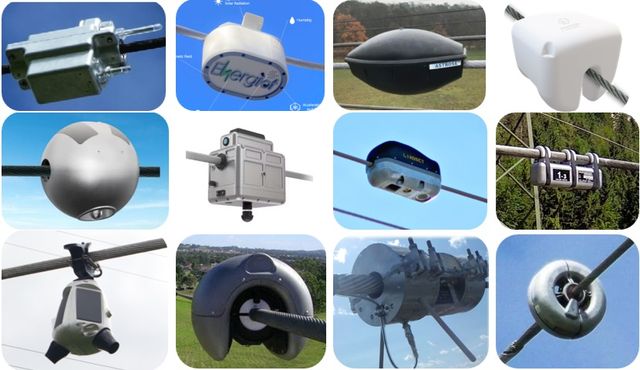
Advanced conductors offer another possibility. Modern conductor designs can carry more electrical current within existing or comparable physical infrastructure, although installation requirements, structural limitations and project economics must be evaluated individually. None of these technologies eliminates the need for new transmission lines. They address a different problem: how much more capacity can be extracted from the infrastructure already available?
That distinction is important. A new transmission corridor may take years to complete, while certain upgrades and monitoring systems can offer improvements on a much shorter development timeline.
Data centres are becoming participants in the electricity system
The relationship between data centres and electricity networks may also need to change. Traditionally, large industrial consumers have largely been treated as loads that electricity systems must accommodate. But data centres have characteristics that could make them more flexible than many conventional industrial facilities. Not every computing task needs to happen at precisely the same moment or in precisely the same location.
Some workloads, particularly certain AI training and batch-processing operations, can potentially be scheduled around periods of greater electricity availability. Other tasks are more time-sensitive and cannot be interrupted without affecting users. This creates an opportunity for demand flexibility. If data-centre operators can shift suitable computing workloads away from periods of grid congestion, they may reduce pressure on local electricity networks without necessarily reducing total computing output.
Battery storage can contribute as well. Batteries can absorb electricity when supply is plentiful and provide power during periods of high demand or short-term disruption.
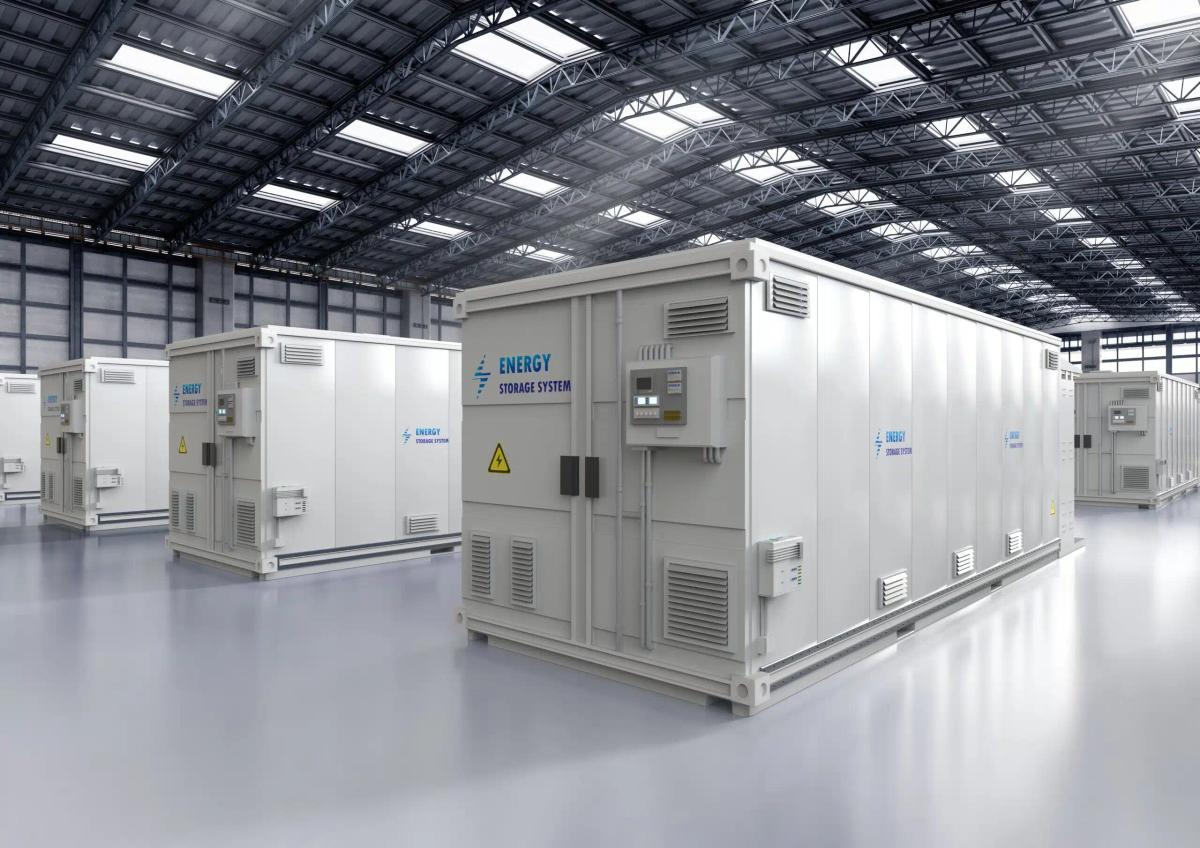
However, storage is not a substitute for unlimited generation or transmission capacity. Its effectiveness depends on its energy capacity, charging opportunities, discharge duration and the frequency of the grid conditions it is intended to address. On-site generation and microgrids offer another approach. A data centre could combine grid electricity with dedicated generation, battery storage and local power-management systems.
This can improve operational resilience and reduce dependence on immediate grid availability, although it introduces additional capital costs, fuel considerations, emissions questions and engineering complexity. The International Energy Agency's October 2026 report on AI and electricity systems highlights the growing importance of integrating data centres into electricity networks, including through better demand forecasting, on-site generation and more flexible electricity procurement.
The more interesting possibility is that large computing facilities could eventually become active participants in grid management rather than simply enormous consumers of electricity.
Who should pay for the infrastructure?
There is another problem that deserves as much attention as the engineering itself: the economics of expanding the electricity network. Transmission infrastructure is expensive, and its costs are ultimately recovered through regulated utility arrangements and electricity charges. When a major data centre connects to the grid, the necessary upgrades may benefit the wider electricity system, but they may also be driven primarily by one company's requirements.This raises a difficult question about who should finance those investments.
If utilities build new infrastructure in anticipation of projected data-centre demand, what happens when the anticipated projects are delayed, reduced or cancelled? The costs of underestimating demand can be significant. Insufficient infrastructure can constrain economic activity and place pressure on electricity prices. But overestimating demand can leave utilities and their customers paying for expensive assets that are not fully utilized.
Grid Strategies has itself highlighted uncertainty in large-load forecasts, estimating that data-centre demand included in utility projections could be overstated by approximately 25 GW. That is a reminder that announced projects and actual electricity consumption are not the same thing. The question becomes particularly important when the infrastructure is intended to serve private technology companies but is financed through systems that distribute costs among broader groups of electricity consumers.
There is no universally straightforward answer. Infrastructure can deliver benefits beyond the immediate customer, particularly when it improves regional reliability and enables additional generation to reach the market. However, the financial arrangements must reflect who benefits, who creates the demand and who carries the risk.
Electricity infrastructure is becoming a measure of technological competitiveness
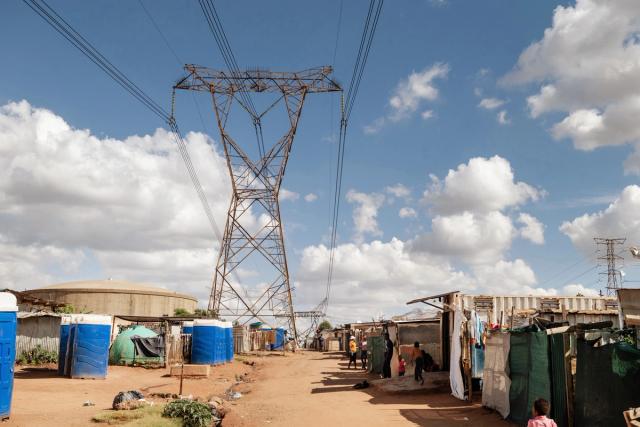
The AI industry has spent years discussing the importance of semiconductor manufacturing, computing architectures, research talent and access to capital. These remain critical determinants of technological competitiveness. Electricity infrastructure is increasingly joining that list. Countries seeking to attract major AI investments need more than available land and favourable tax arrangements. They need reliable electricity, sufficient network capacity, modern substations, transformers and transmission systems capable of supporting large industrial loads.
The International Energy Agency's research makes clear that the pressure is not confined to the United States. Data-centre investment is expanding internationally, while electricity networks and equipment supply chains face growing demands. This creates an interesting competitive dynamic. A country with less advanced computing infrastructure today may still attract future investment if it can provide electricity and develop supporting infrastructure more efficiently.
Conversely, technological leadership can become harder to sustain when the physical systems supporting it cannot expand at the required pace. The AI industry is discovering something that electrical engineers have understood for generations: electricity is only useful when it can be generated, transported and delivered reliably. The next phase of AI development will therefore depend partly on an industry that rarely receives the same attention as semiconductor manufacturers or software developers.
The electricity grid is no longer simply supporting technological progress in the background. It is becoming one of the conditions that determines how far that progress can go.


Discussion
Join the discussion
Comments are hosted by GitHub Discussions. You will need a GitHub account to take part.