Walk through the back corridors of almost any regional public hospital between Dakar and Dar es Salaam, and you will eventually stumble upon a quiet, dimly lit room that functions as an unintended museum.
Inside sits an inventory of good intentions: an infant incubator with a proprietary control board fried by a voltage spike three years ago; an ultrasound machine donated by a European NGO whose interface is locked in German; a modern hematology analyzer idling under a hand-sewn dust cover because the specialized reagents it requires must be refrigerated at four degrees Celsius, yet the provincial cold chain broke down two hundred kilometers up the road.
None of these machines are obsolete. Most are barely used. They were designed by skilled engineers, built with exquisite precision, and delivered by people who genuinely wanted to save lives. Yet they sit in the equatorial heat as heavy, plastic-and-steel monuments to a persistent delusion: the belief that modern technology is an autonomous seed you can plant in any soil and expect to bear fruit.
For decades, the standard diagnosis of Africa’s material struggles has been framed as a deficit of tools. The continent lacks advanced diagnostic equipment, lacks tractors, lacks automated irrigation, lacks industrial robotics, lacks software. The prescribed remedy has been equally mechanical: acquire the tools. Fly them in, clear them through customs, take the ceremonial photograph with the ambassador or the corporate social responsibility director, and declare modernization underway.
This diagnosis is wrong. Africa does not suffer from a technology deficit. It suffers from an acute, chronic misalignment between isolated technical artifacts and the living, stubborn, non-negotiable systems required to keep them alive.
The Phantom Iceberg
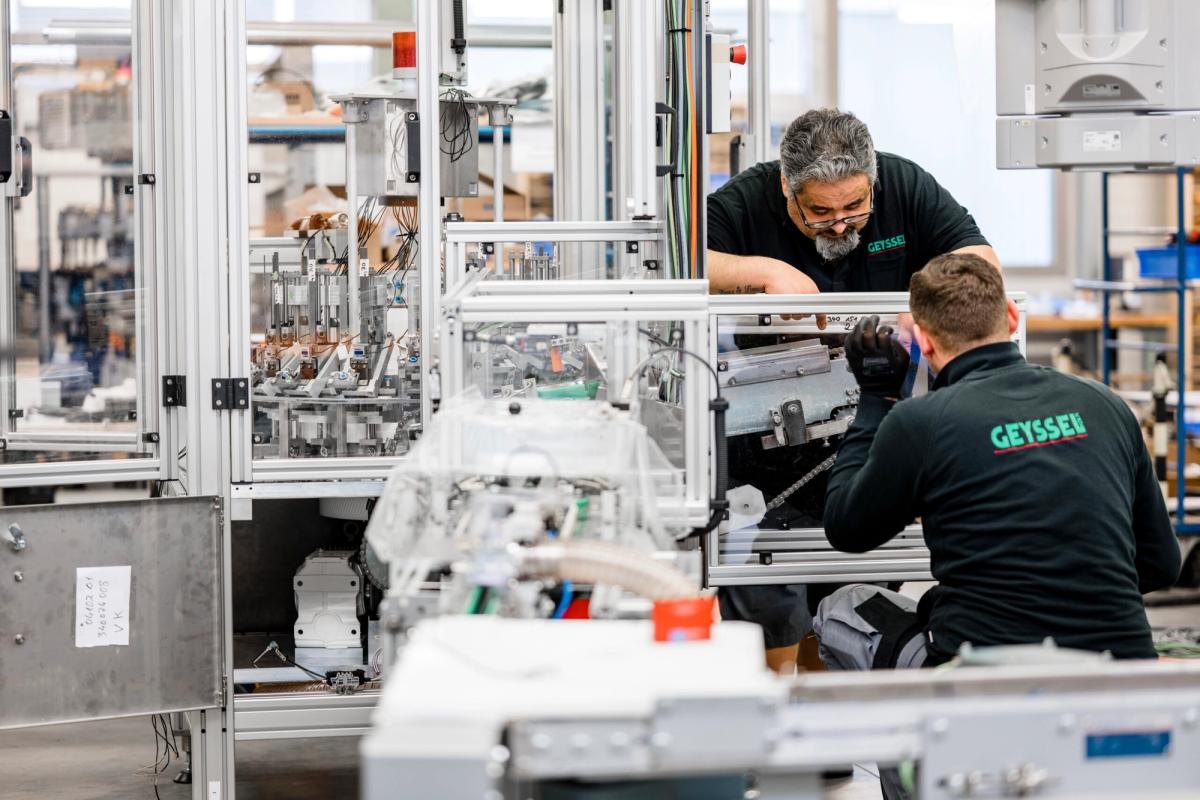
Every complex machine is an amputated organ.
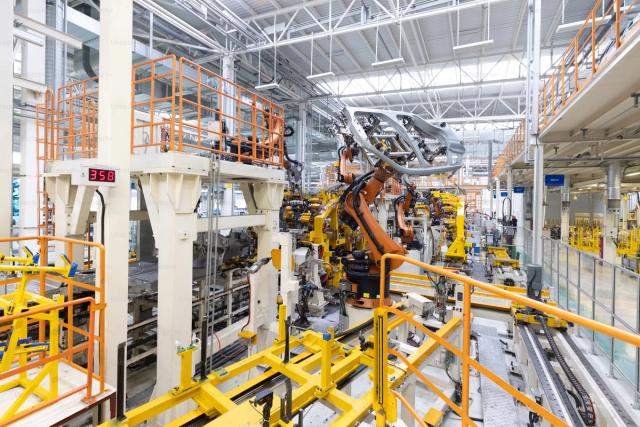
When an engineer in Stuttgart, Shenzhen, or San Jose designs a modern piece of hardware, they do not merely design the object that fits in a shipping crate. They design an object that silently presumes the existence of an invisible, humming civilization.
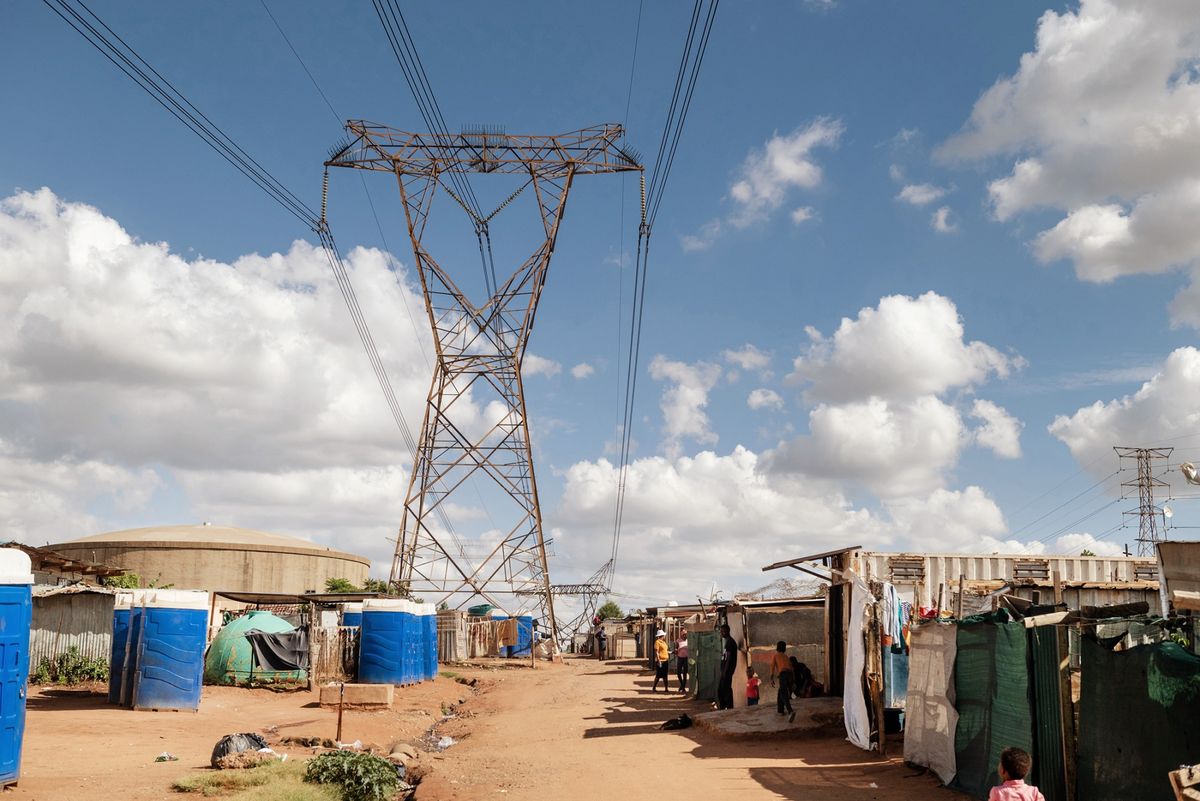
They assume an electrical grid that delivers alternating current within three percent of nominal voltage, twenty-four hours a day, without sudden surges that turn delicate microcontrollers into charcoal. They assume that if a hydraulic gasket fails, a standardized replacement can be ordered from a domestic distributor and arrive by courier within eighteen hours. They assume a municipal water supply with a predictable mineral count that will not scale up internal copper pipes; a network of bonded warehouses; an insurance market capable of pricing operational downtime; and a steady supply of technicians who have completed four-year vocational apprenticeships specifically calibrated to that manufacturer’s diagnostic software.
The artifact; the combine harvester, the 3D printer, the solar inverter; is merely the visible tip of an institutional iceberg.

When that machine is loaded into a container and shipped to an agricultural outpost in northern Ghana or a water treatment facility in eastern Congo, the artifact travels. The iceberg stays behind.
To drop a machine into an environment devoid of its native ecosystem is not to give that environment a tool; it is to hand it an unfunded structural mandate. It demands that a rural district manufacture, on the fly, the entire industrial support matrix of Western Europe or East Asia simply to keep a single pump turning.
When the pump inevitably ceases to turn six months later, outside observers tend to reach for one of two condescending explanations. The technologist blames local incompetence ("they didn’t follow the manual"), while the development bureaucrat blames cultural resistance ("they weren't ready for modern methods").
Both miss the physical reality. The machine did not fail because the people around it were incapable. It failed because it was an invasive species starved of the nutrients its biology required.
The Seductive Trap of "Leapfrogging"
How did we arrive at this blindness?
Much of the blame belongs to the intellectual hangover of the mobile phone revolution. Between 2000 and 2015, sub-Saharan Africa largely bypassed the slow, capital-intensive construction of copper-wire landline telephony. Millions of people went from having no telephone to holding an internet-connected computer in the palm of their hand. Shortly thereafter, Kenya’s M-Pesa demonstrated that an entire population could bypass physical bank branches and build a sophisticated digital financial network on top of basic cellular protocols.

It was an astonishing human achievement. But it also broke the brains of an entire generation of development economists, venture capitalists, and African policymakers.
It birthed the cult of "leapfrogging"; the dangerous idea that digital technology had rendered the boring, heavy, slow work of physical development obsolete. If you could leapfrog landlines, the logic went, why not leapfrog the central electrical grid with distributed solar home kits? Why not leapfrog paved highways with cargo drones? Why not leapfrog municipal water works with nanotechnology filters? Why not leapfrog teachers and education infrastructure with ten-dollar tablets distributed to children sitting under acacia trees?
This line of thought confuses the physics of information with the physics of matter.
Bits are nearly weightless. A cellular signal requires a base transceiver station, a diesel generator, and a satellite backhaul; once that node is active, millions of transactions can ripple through the ether with almost zero marginal wear and tear on physical assets. A software update does not get stuck in a container terminal at the Port of Mombasa because the customs clearance server went offline.
Matter does not leapfrog.
You cannot download a sewer. You cannot stream clean municipal drinking water through an algorithm. You cannot 3D-print a two-hundred-kilometer macadamized farm-to-market road that survives three consecutive monsoon seasons without rutting.
When you move from the digital realm to the mechanical, chemical, and biological realms, the stubborn laws of thermodynamics reassert themselves with a vengeance. Machines vibrate; they gather heat; their bearings grind; their seals degrade under ultraviolet light; their lubricants oxidize.
By convincing ourselves that Africa could bypass the industrial era straight into a frictionless digital future, we excused ourselves from building the foundational systems that make physical technology durable: technical standards, cold chains, drainage networks, localized foundries, and industrial maintenance regimes.
The CAPEX Addiction
This technical mismatch is perpetuated by an economic pathology: the institutional obsession with Capital Expenditure (CAPEX) over Operational Expenditure (OPEX).
Modern aid agencies, philanthropic foundations, and national finance ministries are structurally addicted to procurement. A container load of fifty modern tractors is photogenic. You can line them up on an airstrip. A government minister can climb into the cabin, turn a key for the cameras, and cut a red ribbon tied across the radiator grille. The donor agency can publish a glossy annual report featuring the tractors against a sunset, complete with a clean metric: Fifty modern agricultural units deployed.
Nobody cuts a ribbon for a five-year service contract for hydraulic hoses. Nobody holds a press conference to announce a sinking fund for preventive grease replacement. Philanthropic capital and bilateral aid budgets are overwhelmingly structured to purchase the asset, write off the balance sheet, and declare success on the day of delivery.
What happens on Day 366; when the warranty expires, the first set of proprietary air filters clogs with volcanic dust, and the local currency depreciates thirty percent against the dollar, making imported replacements unaffordable, is treated as an administrative afterthought.
Technology without an operational metabolism is merely future municipal waste arriving on a ship.
When you visit an agricultural mechanization center in the Sahel and see forty identical tractors parked in a weed-choked yard, stripped of their alternators and tires, you are not looking at agricultural failure. You are looking at a procurement system that functioned precisely as designed. The manufacturer sold the units; the agency disbursed its budget; the politicians took credit for the investment. The only thing that failed was the assumption that a tractor is a self-sustaining entity rather than a node in a lifelong supply chain.
The Myth of the Tinkerer
Faced with this institutional void, a counter-narrative has emerged in recent years, one that romanticizes African improvisation.
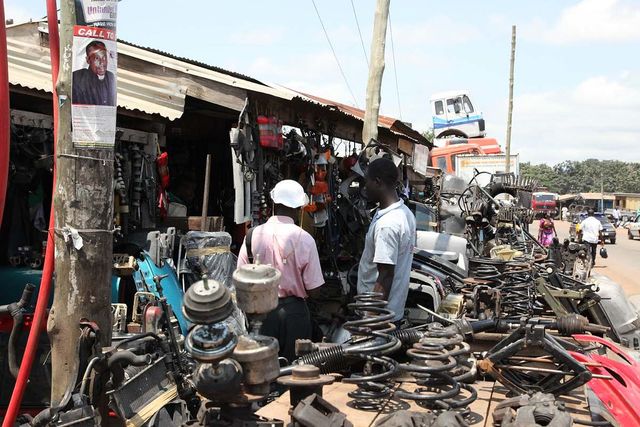
Articles celebrate the artisanal mechanics of Suame Magazine in Kumasi, Ghana; an industrial sprawl where two hundred thousand artisans dismantle, rebuild, and re-engineer automotive engines on grease-soaked earth using little more than hand wrenches, oxyacetylene torches, and sheer willpower. Visitors marvel at the workshops of Ladipo Market in Lagos or the metal fabricators of Gikomba in Nairobi, where discarded steel rebar is beaten into agricultural tools and Peugeot engines from 1984 are coaxed into running for another half-million kilometers.

This resourcefulness is extraordinary, but romanticizing it is a profound mistake.
Improvisation is not an industrial strategy; it is a heroic response to structural abandonment. When a mechanic spends three days using a hand file to fashion a custom brass bushing because the original part is trapped behind a three-month foreign-exchange rationing queue at the central bank, that is not an example of "African innovation." It is a catastrophic tax on human productivity.
More importantly, there is an absolute ceiling to what artisanal improvisation can achieve. You can jury-rig a tractor’s leaf spring with scrap metal and an arc welder; you cannot jury-rig a high-voltage transformer’s dielectric oil. You can bypass a failed electronic fuel injection system on a 1990s diesel utility vehicle by retrofitting an old mechanical carburetor; you cannot bypass the micro-fluidic calibration on a polymerase chain reaction (PCR) machine diagnosing drug-resistant tuberculosis.
By relying on individual ingenuity to bridge the chasm left by broken systems, we place an unconscionable burden on the end-user. We demand that the African nurse, the African farmer, and the African smallholder be not merely competent operators of their tools, but structural magicians capable of defying institutional entropy on a daily basis.
Designing for Reality: The Principles of Metabolic Engineering
If the problem is not the technology itself, but the ecosystem it assumes, then the solution cannot be simply "more technology." Nor can it be "appropriate technology" in the patronizing sense common in the 1970s; condescending downscaled tools that consign developing regions to low-productivity manual labor.
The alternative is what might be called metabolic engineering: designing tools and institutional architectures that assume the presence of friction, volatility, and institutional gaps from the very first sketch.
What does that actually look like in practice?
1. Graceful Degradation Instead of Catastrophic Failure
In an idealized laboratory or an affluent market, equipment is engineered to maximize performance at the absolute limit of efficiency. Tolerances are razor-thin. If a single sensor malfunctions, the entire machine shuts down as a protective measure to preserve component integrity.
In an environment characterized by infrastructural volatility, this design philosophy is fatal.
Systems must be built for graceful degradation. If a modern water purification plant loses its digital telemetry, it should not lock up; it should drop back to an analog, mechanical valve system that pumps water that is ninety percent clean rather than zero percent clean.
If a piece of clinical hardware detects a voltage irregularity, it should not fry its motherboard or refuse to boot; it should isolate its sensitive sub-circuits, throttle its operating speed, and continue running on an internal low-voltage buffer. A tool that fails completely when conditions fall outside narrow parameters is not sophisticated; in a volatile environment, it is simply fragile.
2. Radical Modularity and Component Fungibility
The contemporary industrial design trend in the developed world moves toward integrated, non-repairable assemblies. Housings are glued shut with industrial adhesives; proprietary screws require bespoke bits; components are digitally tethered to specific serial numbers, requiring manufacturer authorization to activate a replacement part.
For Africa, this design paradigm is poison.
Metabolic engineering requires radical modularity. If a machine requires a specific, proprietary 12-volt solenoid that can only be sourced from a single factory in Bavaria, that machine is an engineering failure for the Global South.
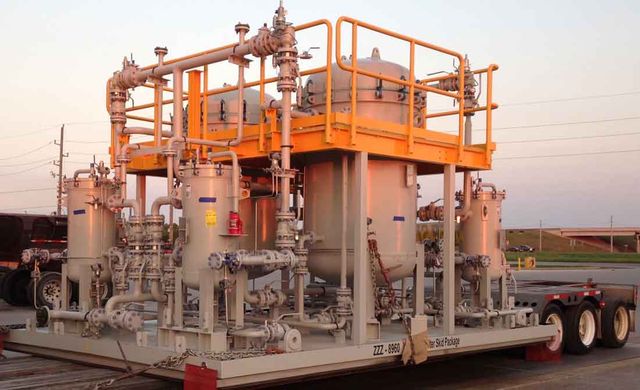
True systems-level engineering asks: Can this drive belt be replaced with an ordinary automotive fan belt found in any roadside shop from Cairo to Cape Town? Can this diagnostic device use open-source, non-metered fluid cartridges that can be synthesized by a local university chemistry lab? Can the frame be repaired with a basic stick welder without warping the alignment?
Simplicity of repair is not a concession to backwardness; it is an elite engineering virtue.
3. Incentives Tied to Uptime, Not Turnover
The procurement architecture must be violently dragged from CAPEX to long-term operational health.
Governments and international institutions should cease purchasing standalone machines. They should purchase guaranteed operational uptime.
When an international medical manufacturer sells an MRI machine to a provincial hospital, the contract should not pay out on delivery and installation. It should pay out in quarterly tranches over seven years, contingent upon the machine being fully operational for at least twenty-six days out of every month.
Watch how quickly the engineering changes when the vendor bears the financial risk of downtime. Suddenly, the vendor does not ship a machine with delicate, dust-sensitive optical drives. They ship an over-engineered, dust-sealed, surge-protected unit with an integrated voltage stabilizer, a three-year locker of high-wear replacement parts kept on site, and a dedicated, locally trained technician paid directly by the manufacturer to keep it running.
The True Measure of Modernity
There is a quiet, revealing difference between an installation and an institution.
An installation is an event. It arrives on a flatbed truck, is greeted by dignitaries, makes an appearance on social media, and slowly decays into the landscape as the entropy of its environment overtakes it.
An institution is a metabolism. It is boring. It consists of training curriculums that run year after year; supply depots that keep mundane inventories of O-rings, copper crimps, and hydraulic fluids; regulatory inspectors who cannot be bribed to certify shoddy electrical wiring; and finance directors who prioritize depreciation reserves over new fleet acquisitions.
For half a century, the international development apparatus and modern industrial lobbies have tried to sell Africa the installation without the institution. They have treated technology as a series of magical charms that can ward off poverty by their mere presence.
The continent does not need more technological talismans. It needs the connective tissue. It needs the unromantic, invisible, institutional wiring that connects the tool to the earth: the standards organizations, the technical schools, the dependable grids, the repair ecosystems, and the design philosophies that take reality seriously.
Until we build those systems, our shiny imported machines will continue to do what they have always done: sit in the dust, quietly waiting for a world that has not yet been built to support them.
THE END