
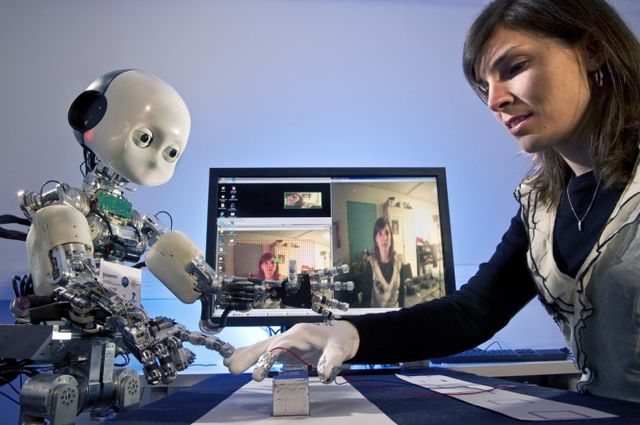
A century ago, a light switch was a purely spatial mechanism. You moved a physical lever, bridging a gap between two copper contacts to complete an electrical circuit. The switch didn't know whether the room was lit, how long the bulb had been burning, or if anyone was standing in the room. It possessed no state beyond its physical orientation. It was an object whose function was entirely explicit in its topology.

Today, a light switch installed in a modern office building is rarely just a physical bridge for current. It is an edge device. It contains a microcontroller, a power regulation stage, a wireless radio transceiver, and firmware running an event loop. When you flip it, you do not physically connect a load to a line; you register an input interrupt. A software thread evaluates the event against a set of configuration rules, polls ambient light sensors, checks a central gateway over a network protocol, and dictates whether a solid-state relay should change state.
The light switch has been subsumed. It is no longer a mechanical assembly that conducts electricity; it is a computer whose application payload happens to be illumination.
This silent transition is unfolding across every category of physical hardware. Thermostats, electricity meters, industrial valves, automotive suspension struts, and home refrigerators have all undergone the same quiet metamorphosis. We tend to describe this phenomenon with phrases like "smart devices" or the "Internet of Things." But those terms miss the underlying structural shift.
The real story is that physical hardware is being transformed into a execution environment for software. And that transformation is dismantling the traditional boundaries between engineering disciplines.
The Illusion of Separation
For most of the industrial era, engineering was organized into clean, modular silos defined by physical domain.
Mechanical engineers owned geometry, kinematics, structural integrity, and thermodynamics. They spoke in the language of tolerances, stress concentrations, fluid dynamics, and gear ratios. Electrical engineers managed power delivery, high-voltage distribution, and energy conversion. Electronics engineers worked downstream, designing discrete circuits, analog signal chains, and printed circuit boards to handle low-power signals. Software engineers arrived last, writing application code for a general-purpose machine sitting inside an air-conditioned room or an isolated ECU enclosure.

This division of labor worked because the handoffs between domains were well-defined. A mechanical engineer built a housing with mounting bosses; an electronics engineer delivered a board that fit those bosses; a software engineer wrote code to control the board's behavior. The domains met at physical interfaces and API boundaries.
That clean separation rested on a crucial assumption: that mechanical behavior, electrical behavior, and computational logic were decoupled in time and space.
When an object becomes a computational system, that assumption breaks down completely.
Consider a modern automotive braking system. In a purely mechanical or hydraulic setup, braking force is a direct function of pedal pressure, leverage, and fluid mechanics. The physical structure is the logic. In a modern brake-by-wire system, the pedal is a sensory transducer. The deceleration force is calculated dynamically dozens of times per second by algorithms factoring in wheel speed, steering angle, vehicle yaw rate, and battery state-of-charge for regenerative braking.
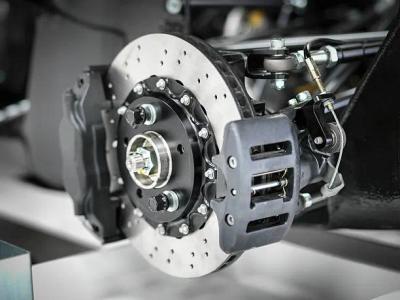
The mechanical components (calipers, rotors, hydraulic lines) cannot be designed in isolation from the control algorithms, because the software dynamically alters the mechanical load profiles. Conversely, the control algorithms cannot be written without an exact mathematical model of the physical system's thermal limits, mechanical hysteresis, and electrical power limits.
Here, software is not a layer applied on top of physical hardware. Software is a dynamic structural component of the mechanical system.
The Embedded Reality: Constraints as the Real Canvas
When computation migrates into physical objects, it does not enjoy the infinite, abstract abstractions of the cloud or the desktop. It operates under brutal physical constraints.
In cloud computing, memory is functionally limitless, clock speed is cheap, and latency is bounded mostly by network hops. If a software thread stalls for fifty milliseconds in a web application, a loading spinner rotates.
If a software thread stalls for fifty milliseconds in an electronic motor controller regulating a high-speed brushless DC motor, the inverter switches fire out of phase. The result isn't a slow user interface; it is a thermal runaway event, blown MOSFETs, or physical destruction of the rotor shaft.
This interaction loop highlights why the distinction between software and hardware engineering collapses at the edge:
- Determinism over Throughput: Real-time embedded software doesn't prioritize raw processing speed; it demands deterministic execution timing. A calculation delivered two microseconds late is fundamentally incorrect, regardless of its numerical accuracy.
- Hardware-Software Co-Design: A software engineer cannot optimize a control loop without understanding the analog propagation delay of the sensing circuit, the switching time of the silicon carbide switches, and the mechanical moment of inertia of the load.
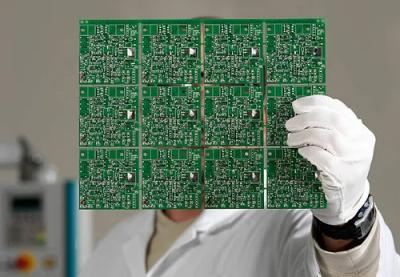
- Electromagnetic Reality: High-speed microprocessors and switching power supplies radiate electromagnetic energy. A layout decision on a multi-layer PCB; such as a poorly routed ground return path; can induce noise in an analog sensor line, corrupting the data feeding the software algorithm, which in turn causes mechanical instability in the physical machine.
At this intersection, the code is the physics, and the physics is the code.
The Death of the "Pure" Discipline
What does this mean for the organizations that design, build, and deploy physical technology?
It means that the traditional organizational chart is becoming an operational liability. When a company treats electrical, mechanical, embedded systems, and software engineering as separate departments that communicate via handoff documents, the product inevitably suffers from friction at the seams.
We see this friction regularly in modern engineering projects:
- Mechanical teams design an enclosure that thermal throttling forces the software team to run at 50% clock speed.
- Software teams implement complex feature sets that overwhelm the memory limits of the selected microcontroller, forcing a costly board spin late in the development cycle.
- Electronics teams choose power converters that emit high-frequency noise directly into the frequency band used by the product's onboard wireless communications module.
The most effective hardware products of the coming decade are not being built by teams of single-domain specialists passing artifacts over a fence. They are being built by cross-disciplinary teams who understand the whole system stack; from Maxwell’s equations and heat transfer to memory management and real-time execution loops.
This shift demands a new kind of engineering literacy. The mechanical designer must understand how PCB layout impacts heat dissipation and electromagnetic compatibility. The firmware engineer must understand transistor switching characteristics and the physical dynamics of the actuators they control. The systems designer must see the entire product as a single, unified computing engine whose medium includes aluminum, copper, silicon, and state machines.
The Human Consequence: Software Mindsets in a Physical World
As everyday objects turn into computers, we are quietly changing our relationship with the material world.
When an object's behavior is defined entirely by its physical geometry, its performance is static. A mechanical clock works the same way on day 1,000 as it did on day 1, subject only to wear and lubrication. It is self-contained, predictable, and local.
When an object becomes a computational platform, it enters the cycle of soft-product lifecycles:
- Malleability: The physical object can be altered long after it leaves the factory floor via firmware updates, reconfiguring control loops or unlocking hardware capabilities dynamically.
- Fragility of State: The object is no longer just subject to physical wear; it is susceptible to memory leaks, state corruption, network desynchronization, and software regressions.
- Dependency: The functionality of an ordinary physical object becomes contingent on software stacks, security patches, and cloud backends.
There is deep power in this evolution; unprecedented energy efficiency, adaptive control, dynamic diagnostics, and functionality that would be impossible through mechanical linkages alone. But there is also an underlying responsibility.
When we transform a mechanical system into a computing system, we trade simplicity for capability. We exchange the permanent legibility of physical mechanisms for the vast, dynamic potential of embedded execution environments.
The future of engineering doesn't belong to the software developer who views hardware as an abstract peripheral, nor to the mechanical engineer who views software as an afterthought. It belongs to those who view a physical device for what it truly has become: an integrated system where metal, silicon, current, and code operate as a single, continuous element.


Discussion
Join the discussion
Comments are hosted by GitHub Discussions. You will need a GitHub account to take part.