Remote Monitoring
FieldSense™
FieldSense™ is a proposed remote monitoring device for agricultural and industrial assets located where mains power or reliable network connectivity may be limited.
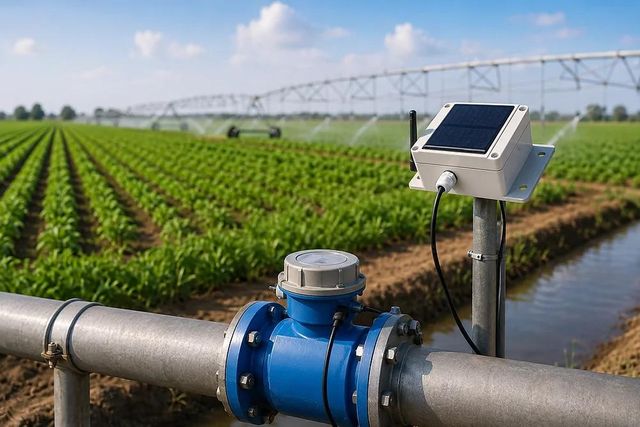
A pump, water tank or irrigation installation can operate far from the people responsible for maintaining it. Checking its condition may require travelling to the site, even when the equipment is operating normally. When a fault develops between visits, the problem may remain unnoticed until it interrupts an operation or causes damage. FieldSense™ is being developed to address this gap with a low-power device that can collect measurements locally and communicate relevant information from remote sites, particularly where continuous mains power and high-bandwidth internet are impractical.
FieldSense™ is envisioned as a rugged, low-power monitoring unit connected to sensors selected for a particular application. Depending on the installation, these could measure water level, temperature, equipment operating state, electrical status or another measurable condition.
A microcontroller would collect sensor readings at defined intervals, apply basic checks and store the results. A communications module could then transmit readings or alerts through a supported network. A solar panel and rechargeable battery are potential power options for sites without a convenient electrical supply. The final power system would need to be sized around the sampling interval, sensor load, network coverage and local weather conditions.
The intended benefit is to reduce routine manual checks and help operators identify conditions that warrant attention. For example, a monitoring configuration might report that a tank has fallen below a defined level or that a pump has stopped reporting its expected operating state.
FieldSense™ would not automatically diagnose every equipment failure, guarantee connectivity in remote locations or replace physical inspections and proper maintenance. It is also not intended as a safety-rated control system. Applications that need real-time machine control, precise process regulation or guaranteed emergency response would require a different system architecture.
The initial development focus would be one clearly defined use case—such as remote water-tank or irrigation-pump monitoring—before expanding the hardware and software to support other sensor configurations.
Availability
In development
Early-stage concept.
Specification
- Processing platform
- Low-power microcontrollerSpecific controller to be selected during hardware development.
- Sensor inputs
- Application-specific sensor interfacesInitial configuration is expected to focus on water level and equipment status.
- Power system
- Solar-assisted rechargeable battery (planned)Panel and battery capacity will depend on sensor load, reporting frequency and required autonomy.
- Panel and battery capacity will depend on sensor load, reporting frequency and required autonomy.
- Cellular or LoRaWAN (under evaluation)Final option depends on site coverage, infrastructure and data requirements.
- Enclosure
- Outdoor weather-resistant enclosure (planned)Ingress-protection rating to be established and verified through testing.
Typical uses
- Remote irrigation-pump status monitoring
- Water-tank level monitoring
- Agricultural environmental measurements
- Remote equipment operating-hour tracking
- Solar installation status monitoring
- Water-system condition monitoring
- Alerts for abnormal sensor readings
- Monitoring assets at sites with limited mains power
Enquiring about the FieldSense™?
Tell us the site, the load and the constraint. If it is the wrong product for the job, Helena will say so.