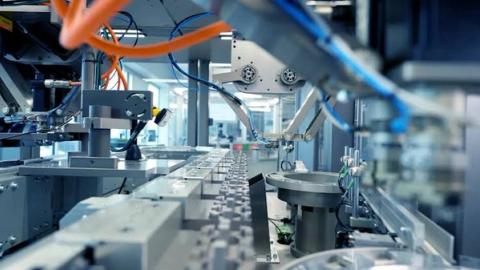
Automation & Industrial Systems
Industrial control, PLC programming, control panel development and automation integration for processes and equipment. We work towards making operations more consistent, observable and manageable.
Technology
Industrial automation uses electrical controls, programmable logic controllers, sensors and interfaces to coordinate equipment and processes. Helena is developing its capabilities in control systems that make industrial operations better.
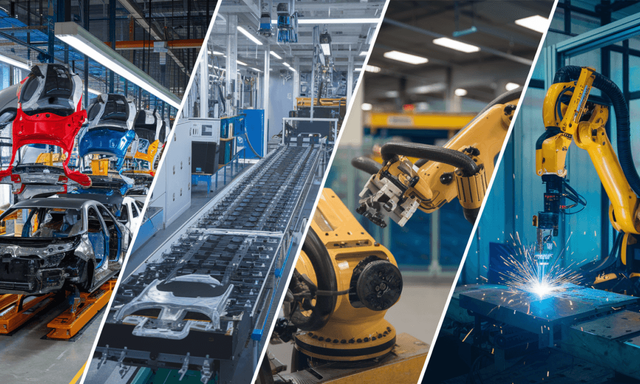
Industrial automation connects machines, sensors, actuators and control logic into systems that carry out defined operations. At the centre of many such systems are programmable logic controllers (PLCs), which process inputs and execute programmed responses according to the requirements of a machine or process. The domain brings together electrical engineering, control logic and system integration, providing a path from individual electrical installations towards more coordinated industrial applications.
Automation begins with a process that needs to be controlled. Before selecting a PLC or designing a control panel, it is necessary to understand the operating sequence, the signals available, the expected behaviour of the equipment and what should happen when something goes wrong.
A typical control system may include sensors that report operating conditions, a PLC that evaluates inputs and executes logic, actuators that influence the process, and an HMI that allows an operator to observe or adjust selected functions. The design must account for normal operation as well as faults, unexpected inputs and recovery after interruptions.
For Helena, this domain builds on the relationship between electrical installations and industrial control. Developing the capability involves understanding control circuits, PLC programming, input/output configuration, sensor integration, control panel design and systematic testing. These elements must be treated as parts of a complete system rather than isolated technical tasks.
A control sequence that works under ideal conditions is not necessarily ready for deployment. Testing must examine expected operating states, abnormal conditions, interlocks and recovery behaviour. Safety-related control functions require particular care and must be designed and validated in accordance with the relevant requirements.
Further development can extend towards HMI applications, industrial communications, process instrumentation and the integration of multiple control devices. The aim is to build a disciplined approach to automation that is suited to the actual process and maintainable over its working life.
In development
Industrial control, PLC programming, control panel development and automation integration for processes and equipment. We work towards making operations more consistent, observable and manageable.
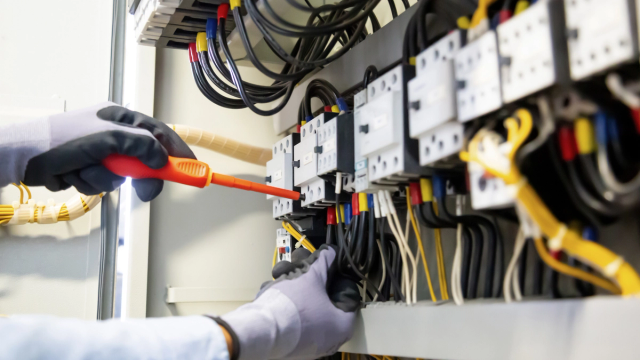
Electrical installation, maintenance, fault diagnosis and solar energy solutions for residential, commercial and industrial environments. We work across the systems that distribute, use and supply electrical power.
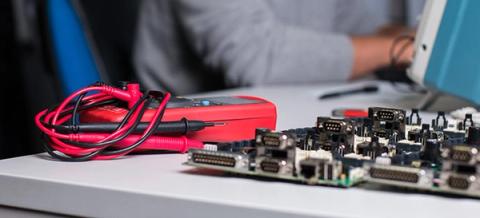
Embedded hardware and electronics development for devices that sense, process and interact with the physical world. Our developing work spans microcontrollers, circuit design, PCB development and hardware prototyping.
Describe the site and the constraint. Helena will say whether this is the right approach, and what it would take to be sure.